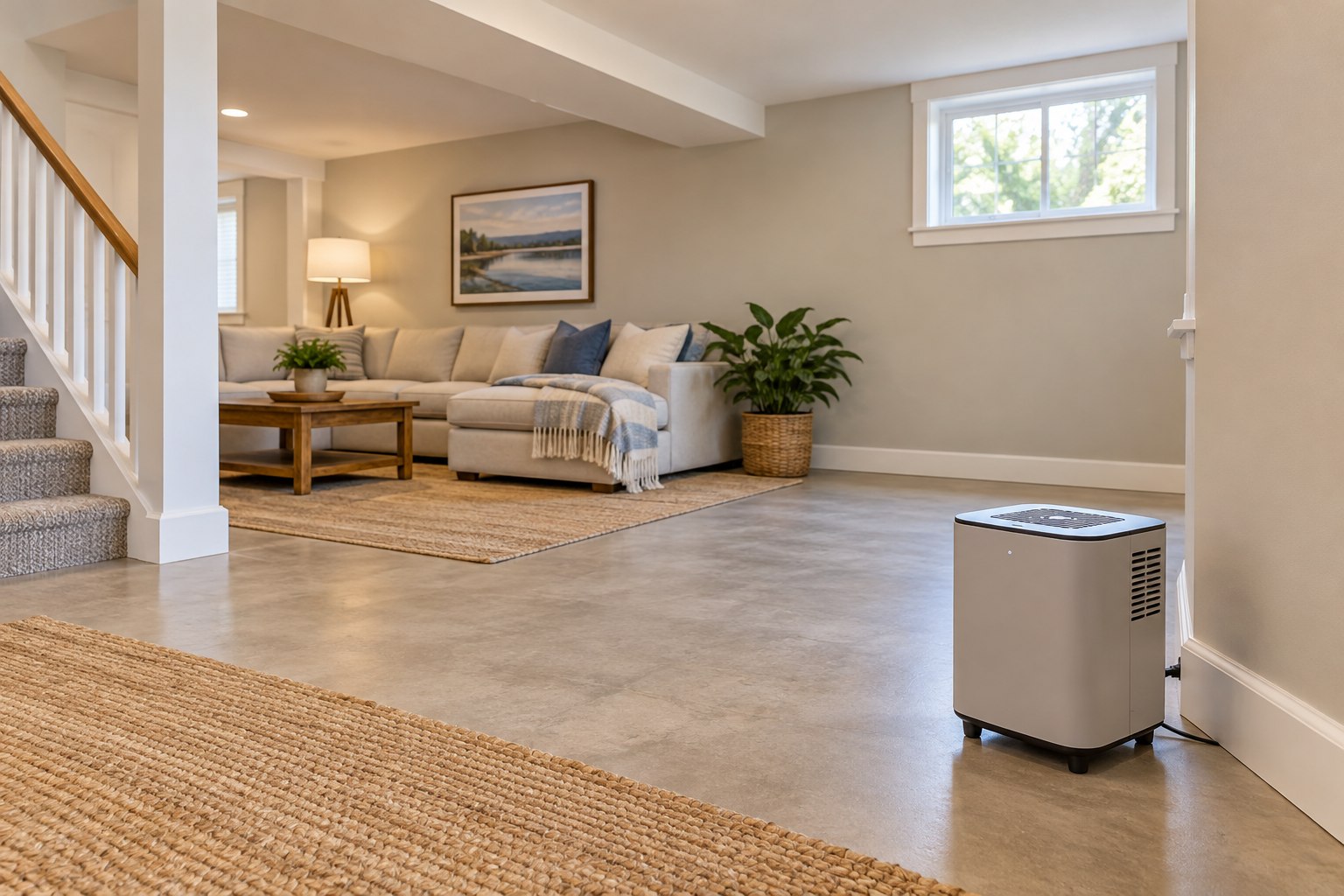

When buying a St. Mary's County home, arrange radon testing for the actual property rather than relying on its address, appearance or a neighboring result. The EPA's real estate radon resources direct buyers and sellers to testing and mitigation guidance. Start by collecting any previous results, asking a qualified provider about the proposed test and coordinating access with your contract calendar. My recommendation is to turn the radon question into a documented part of your due diligence, with clear responsibility for testing, interpreting the report and any needed follow-up.
Know what question you are trying to answer
The EPA's introduction to radon explains that radon is a radioactive gas and that exposure can create health risks. A home's presentation does not answer that question. Ask your test provider to explain what its proposed measurement can tell you about this property and what it cannot establish.
Before the appointment, tell the provider which areas you expect to use and whether you know of an existing mitigation system. Ask what information it needs about the building. Keep the provider's explanation with the testing agreement so you can compare the intended scope with the final report.
I recommend avoiding an all-purpose question such as whether the house is safe. Ask instead what was measured, where, under which conditions and what action the qualified professional recommends. That produces a more useful conversation without asking an agent to make a health determination or treating one report as a guarantee about every future condition.
Do not use the county map as a property result
The EPA's radon-zone map guidance says the map should not be used to decide whether an individual home needs testing. It also recommends testing regardless of location. Keep that distinction in view when someone describes an area as having little radon or cites a nearby home's result.
For a property in Leonardtown, California, Mechanicsville or another part of St. Mary's County, ask for records tied to that house. Apply the same approach if your search extends into Calvert or Charles County. The practical task is to investigate the property, not to assign a health label to a community.
Use my St. Mary's County homes page for the geographic search, then maintain a separate due-diligence sheet for each candidate. Write down whether previous records exist and what testing you still want to discuss. Do not mark the radon question complete merely because a map or listing description looks reassuring.
Ask for previous test and mitigation records
Request complete reports rather than a photograph of one number. Ask for the test date, measurement location, device or laboratory information and any stated limitations. If mitigation was installed, request the installation records, available follow-up results and service information. Share those records with the provider evaluating the current house.
The EPA's Home Buyer's and Seller's Guide to Radon discusses reviewing prior testing and reasons a buyer may seek a new measurement. Ask the provider whether the existing records address your intended use and the current property conditions. Have it explain whether further testing is appropriate.
Keep seller information and independent evaluation distinguishable. A seller may supply helpful records without answering every technical question. My recommendation is to place the original report, any system records and your provider's written recommendation in the same folder, with dates visible. That makes it easier to understand what evidence you have and which questions remain open.
Choose a provider and an agreed test scope
The EPA's guidance on finding a radon professional provides resources for locating measurement and mitigation services. Ask the provider about its credentials, the service agreement, the reporting process and how it handles questions after delivery. Confirm who will perform the work if another company is involved.
Ask what the quote includes: placement, retrieval, analysis, a written report and any consultation. Request the scope in writing and clarify whether repeat testing or a follow-up visit is included. If you are also arranging a general home inspection, ask which company is responsible for the radon service instead of assuming it is part of the inspection package.
My recommendation is to decide based on a service you understand, with a provider qualified to explain the result. Avoid choosing solely from the earliest appointment or a price without a defined scope. Keep the provider's contact information accessible to your transaction team while reserving technical interpretation for that professional.
Match the test plan to the transaction calendar
Ask the provider about the proposed measurement period, report delivery and any follow-up it may recommend. The EPA's radon testing guidance explains that different testing approaches are available. Have the provider explain which approach fits your question and the time available without treating speed as the only consideration.
Review the signed contract with your agent and attorney before scheduling. Ask what deadlines apply to your inspection-related decisions and any required notice. This article does not establish a cancellation right, repair obligation or automatic extension. If the testing schedule does not fit, discuss the issue promptly with the transaction team.
Create a calendar entry for each distinct task: access confirmation, placement, retrieval, report review and any additional evaluation. My recommendation is to leave time for questions after the result arrives. Receiving a report and understanding how to respond to it are different steps, so do not plan as though the first automatically completes the second.
Coordinate access and required testing conditions
The EPA's real estate testing guide addresses closed-house conditions and precautions against test interference. Obtain the provider's specific written instructions before the appointment. Have the transaction team arrange for the seller or occupant to receive and acknowledge those instructions.
Ask who needs access to the measurement location and how placement and retrieval will be handled. Do not move or operate the device yourself unless the provider instructs you to do so. If access, weather or household activity creates a concern, tell the provider and ask how it should be documented.
Keep the conversation practical and neutral. My recommendation is to coordinate a valid measurement, not to accuse anyone based on an assumption. If the provider identifies a testing limitation or possible interference, request its explanation and next-step recommendation. Share that information with your agent and attorney before deciding what the contract permits you to do.
Review the report with the professional
Read the full report and check that it identifies the property and intended measurement location. Ask about the units, result, testing conditions and any limitation noted. If different numbers appear in a monitor summary, ask which figure the provider uses for its conclusion and why. Do not select the most reassuring or alarming number on your own.
The EPA's radon risk and solution resources provide further background on testing and reduction. Use them to prepare questions, then ask the qualified professional to interpret your actual report. Avoid translating general guidance into an individualized medical recommendation or an agent's certification of the home.
The EPA's buyer and seller guide recommends fixing a home when the radon level is 4 picocuries per liter, or pCi/L, or higher. It also says levels below 4 pCi/L still pose risk and may be reduced. Discuss the measurement and recommended response with your qualified provider; do not describe a lower result as a guarantee.
My recommendation is to leave the review with a written answer to three questions: what does this measurement show, what further action is recommended, and what remains uncertain? Keep those answers attached to the report. They give your transaction team a clear foundation for discussing the next decision without inventing a conclusion from a screenshot.
Investigate mitigation using a property-specific scope
If reduction work is being considered, request an evaluation and written scope from a qualified mitigation professional. Ask how the proposed work relates to the property's layout, existing equipment and available records. Request an explanation of the recommended approach, included work and follow-up measurement.
The EPA's consumer guide to radon reduction provides background on choosing and maintaining a reduction approach. Ask the contractor to identify any assumptions in its estimate and any further evaluation needed. Do not assign a generic online cost to the actual house.
Have your attorney and agent address the transaction terms if work, a credit or another response is proposed. Keep the technical scope separate from the contractual agreement about who will do what. My recommendation is to make the records specific enough that the professional, buyer and seller can understand the proposed work without promising that an unscheduled repair will be completed by an invented date.
Keep records through settlement and ownership
Before settlement, review any agreed work and outstanding testing items with the transaction team. Ask for the documentation required by the agreement and any professional follow-up it calls for. Keep original reports, invoices and subsequent results together, clearly dated. Have the appropriate professional explain a difference between earlier and later findings.
If the property has a mitigation system, request operating instructions, service contacts and any relevant warranty information. Ask the professional how to recognize a service issue and what future testing or maintenance it recommends. Do not substitute a general home-maintenance checklist for system-specific guidance.
Prepare a simple handoff note for your future self before the transaction file becomes crowded. List the measurement provider, where the complete reports are saved, the person who can explain the system and any unresolved question you plan to revisit. Attach the written instructions instead of relying on a memory of the inspection conversation. If you later change how you use a room, keep that note accessible when discussing further evaluation with a professional. My recommendation is to make the information useful beyond the purchase deadline. A well-organized file lets you ask a precise question months later without having to reconstruct who tested the home, what they measured or what they recommended at the time.
For the rest of your purchase planning, see my Maryland buyer guide and property-systems guide. I can help coordinate the transaction questions and keep the records organized. Bring me the address and your timing, and we can plan the access and decision calendar while qualified providers handle testing, interpretation and any reduction work.