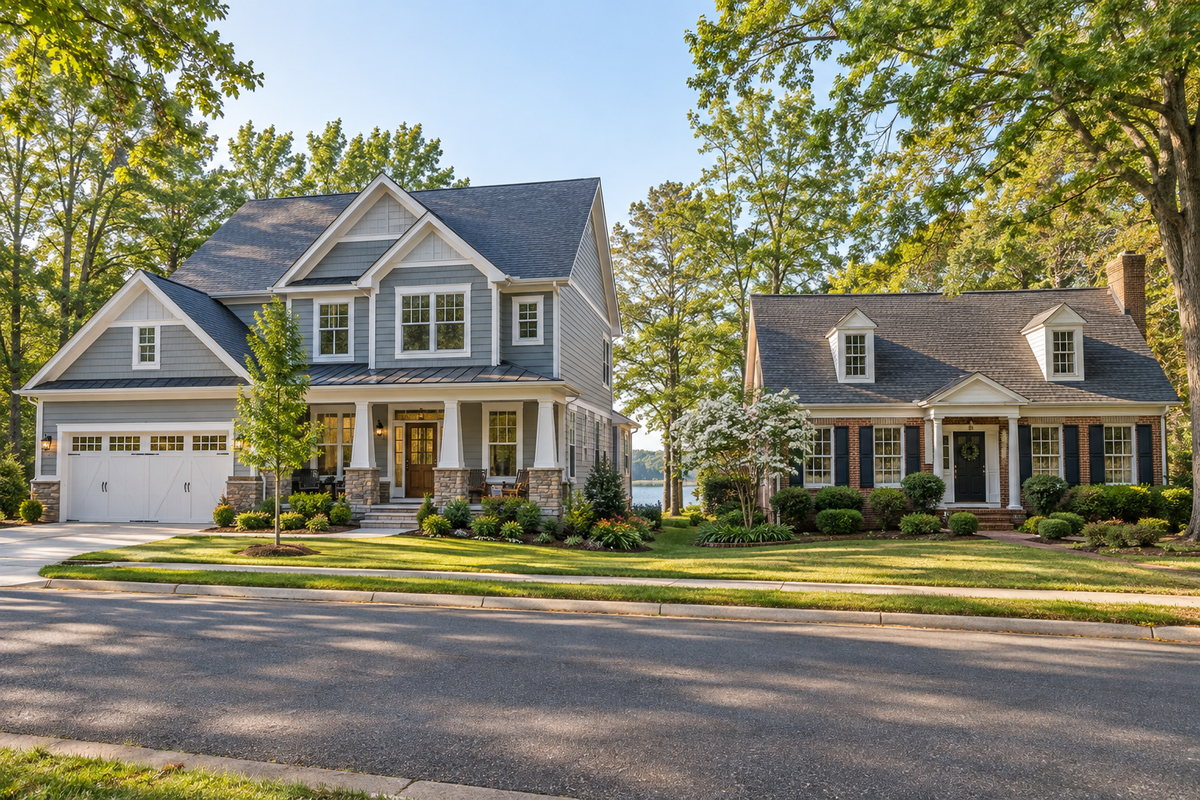

Choosing between new construction and a resale in St. Mary's County comes down to total cost, timing and how much risk you want to manage. A new home gives you modern systems and a builder warranty. A resale usually gives you a firmer closing date, a finished yard and more room to negotiate. Both can be the right answer.
This guide compares them with the same yardstick, explains the Maryland protections that come with a new home (builder registration, deposit rules and implied warranties), and walks through the builder's contract, inspections and the final walkthrough. Here's how I help buyers decide.
How Much New Construction Is There in St. Mary's County?
Building permits for new private housing in St. Mary's County have ranged from 238 to 555 a year since 2020, according to U.S. Census data published on FRED. The county's 2025 Planning Commission annual report counted 198 new residential permits and 159 homes that received certificates of occupancy in 2025.
New Housing Permits in St. Mary's County
Units authorized by building permits, 2020 to 2025
Most of the newer growth is directed to the county's planned growth areas. The same report says 95.5% of units approved in 2025 were inside the Priority Funding Area, which is where public water and sewer are planned. That's useful when you're comparing a new subdivision with an older home on well and septic.
How Do I Compare the Total Cost, Not Just the Price?
A base price on a new home rarely tells the whole story. Line up both options with the same list:
- Upgrades. Model homes usually show upgrades. Price the home the way you'd actually buy it.
- HOA dues and what they cover.
- Property taxes. The first bill on a new home may not reflect the finished house yet. Run the numbers with my St. Mary's property tax guide.
- Extras a resale often includes: blinds, landscaping, a fenced yard, appliances.
- Your commute. Where the home sits relative to the Pax River gate you'll use can be worth more than a new kitchen.
How Does Timing Compare With My Move Date?
A resale can close on a timeline you and the seller agree to, which matters when you're working toward a report date or a lease ending. A home that's still being built depends on the builder's schedule, inspections and weather. Ask for realistic completion dates in writing, and have a backup plan if construction runs long.
A long build also affects your loan. Ask your lender how long a rate lock lasts, what an extension costs, and whether the builder's incentives depend on using a particular lender. If you're renting while you wait, line up a lease that can flex by a month or two in case the finish date moves.
What Maryland Protections Come With a New Home?
Maryland requires home builders to register with the Attorney General's Consumer Protection Division before entering into contracts with consumers, according to the Office of the Attorney General. You can check a builder through the Home Builder Registration Unit, which also runs a Home Builder Guaranty Fund for losses caused by a registered builder's act or omission. The fund has eligibility rules and limits, so it isn't a guarantee that every loss or dispute will be repaid.
Before You Sign a Builder Contract
Maryland Attorney General guidance
- The builder's Maryland registration number is in the contract
- A statement that the home will be built to all applicable building codes
- The performance standards that apply
- You received the state's consumer pamphlet before signing
- Your deposit terms are in writing
Your deposit has its own protection. When a builder takes money on a home that isn't finished, Maryland law requires the builder to hold it in a segregated escrow account, or back it with a surety bond or a letter of credit from a Maryland bank, according to the Maryland Attorney General's consumer guide to buying a new home. Ask which one your builder uses. Your contract still decides when a deposit is refundable and what happens if construction is delayed or you withdraw, so read those sections closely.
New homes in Maryland also carry implied warranties that the home is free from faulty materials, built to sound engineering standards, built in a workmanlike manner and fit for habitation. Under Maryland Real Property § 10-203, those warranties generally run one year after delivery of the deed or the original buyer taking possession, whichever comes first, and two years for structural defects from completion, delivery or possession, whichever comes first, under § 10-204. A builder's written warranty may add to that. Have an attorney explain how the two fit together for your contract.
Should I Bring My Own Agent to the Model Home?
Yes. The sales rep in the model home works for the builder. Having your own agent means someone is reading the builder's contract with you, asking about upgrades and incentives, and keeping an eye on inspections and dates. Some builders require your agent to be registered at your first visit or contact, so check the builder's policy and bring me in before you walk in.
Some builders pay the buyer's agent and some don't, and the arrangement should be in writing before you start. Ask me about it on our first call, so there are no surprises later.
Should I Inspect a Brand-New Home?
Yes. New doesn't mean perfect. An independent inspection before the drywall goes up lets an inspector see framing, wiring and plumbing that will be covered later. A second inspection before your final walkthrough catches what a busy job site missed. It's one of the steps in my St. Mary's home buyer's guide.
Where Does Each Option Come Out Ahead?
New Construction vs. Resale
How the two usually compare
Resale
- Firmer closing timeline
- Finished yard, mature trees
- More room to negotiate
- Often closer in to town centers
New construction
- Modern layout and systems
- Builder warranty plus Maryland implied warranties
- Pick your own finishes
- Mostly inside planned growth areas
If you're not sure which way to go, tell me what you need and I'll show you both side by side, with real numbers on the same list.
What Should I Ask the Builder?
- What's included in the base price, and what does each upgrade cost?
- What's the realistic completion date, and what happens if it slips?
- How much is the deposit, how is it protected, and when is it refundable?
- What does your written warranty cover, for how long, and how are claims handled?
- Can my own inspector visit before drywall and before the final walkthrough?
- Are there incentives if I use your preferred lender, and how do they compare with an outside lender's offer?
What Should I Know About the Builder's Contract?
Builder contracts are written by the builder and usually look very different from a standard resale contract. Read the deposit terms, change-order rules, completion timelines, and what happens if the home appraises below the price. This is where having your own agent pays off. For anything legal, a real estate attorney can review it.
How Do I Handle the Final Walkthrough and Punch List?
Before closing, walk the home with your inspector's report in hand and make a punch list: scuffs, sticky doors, missing trim, anything that isn't finished. Get the builder's commitment in writing for when each item will be fixed. Then keep your warranty paperwork and the date you took possession somewhere you'll find it, since the warranty clock starts then.
If something goes wrong later, put the warranty claim in writing, include photos and dates, and keep copies of every response. A clear paper trail makes any claim easier to resolve, whether it goes to the builder or further.
What Happens If a New Home Appraises Below the Price?
If you're financing, your lender orders an appraisal, and a new home can come in below the contract price, especially after a lot of upgrades. The builder's contract usually spells out what happens next, and it may differ from a resale contract. Read that section before you sign, and ask your lender how much cash you'd need if the appraisal comes in short.
Upgrades are where this shows up most. A finish you love may not add the same amount to the appraised value that it added to the price.
What Does a Side-by-Side Comparison Look Like?
Example scenario: This is made up to show the comparison, not a real sale. A buyer is choosing between a to-be-built home in a new subdivision near Leonardtown and a 15-year-old resale in California, MD.
We list both on the same sheet: the new home's base price plus the upgrades the buyer actually wants, HOA dues, a first-year tax estimate, blinds and landscaping, against the resale's price, its older water heater and roof, and the shorter drive to the gate. The builder estimates completion in about eight months, and the buyer's lease ends in five.
That timing gap ends up deciding it, not the kitchen. A different buyer with a flexible move date could land on the opposite choice. The comparison doesn't pick for you. It shows you what you're trading.
What Mistakes Do Buyers Make With New Construction?
- Pricing the model, not the home. Base price plus the upgrades you want is the real number.
- Walking in alone the first time. Some builders won't add your agent after your first visit.
- Skipping the pre-drywall inspection. Once walls close, you can't see what's inside them.
- Budgeting from the lot's tax bill. Taxes go up once the finished house is assessed.
- Losing the warranty paperwork. Claims depend on dates and documents.
Who Answers Each Part?
- Maryland Attorney General's Home Builder Registration Unit: whether a builder is registered, and the Guaranty Fund.
- A real estate attorney: the builder's contract and how warranties apply.
- Your lender: appraisal, rate locks on a long build, and builder incentives.
- A home inspector: pre-drywall and final inspections.
- Me: the side-by-side comparison, upgrade and incentive questions, and dates.
What If I Want to Build on My Own Lot Instead?
That's a different path. Buying land means checking zoning, utilities, septic suitability and the Critical Area before you count on building, and it usually takes longer. I'll cover it in its own guide. For now, start with my well and septic guide to see what the Health Department looks at.
Frequently Asked Questions
The builder's sales rep works for the builder. Your own agent looks out for you on upgrades, contract terms, and inspections. Some builders require your agent to be registered on your first visit, so check the policy and bring me in early.
Yes. An independent inspection before drywall goes up and again before closing catches what a busy job site misses. It's one of the steps in my home buyer's guide.
Compare the total cost, not just the price: upgrades, HOA dues, property taxes, and your drive to the gate you'll use. Start with which Pax River gate fits your schedule.
Use the Maryland Attorney General's Home Builder Registration Unit lookup before you sign. Builders have to register before contracting with consumers, and the registration number belongs in your contract. See my buying page to start a search.
Maryland's implied warranties generally run one year after delivery or possession, whichever comes first, and two years for structural defects, under Real Property 10-204. A builder's written warranty may add coverage. Track the dates with my buyer's guide checklist.
Maryland law requires a builder to keep deposits on an unfinished home in a segregated escrow account, or back them with a surety bond or a Maryland bank letter of credit. Ask which your builder uses. My affordability guide covers the rest of your cash to close.
Sources: FRED: new private housing permits, St. Mary's County · St. Mary's County Planning Commission 2025 annual report · Maryland Attorney General: new home builder registration · Maryland Attorney General: Home Builder Registration Unit · Maryland Attorney General: new home consumer rights and remedies · Maryland Real Property §§ 10-203 and 10-204: implied warranties. Checked October 2026; rules and rates can change, so confirm anything that affects your decision.
This article is general real estate information, not legal, lending, tax, or insurance advice. Talk with the right licensed professional about your specific property.
Thinking About Buying in St. Mary's?
Tell Nicole what you're looking for and she'll send matching homes, with the local details checked.
Tell Me What You're Looking For Schedule a Consultation