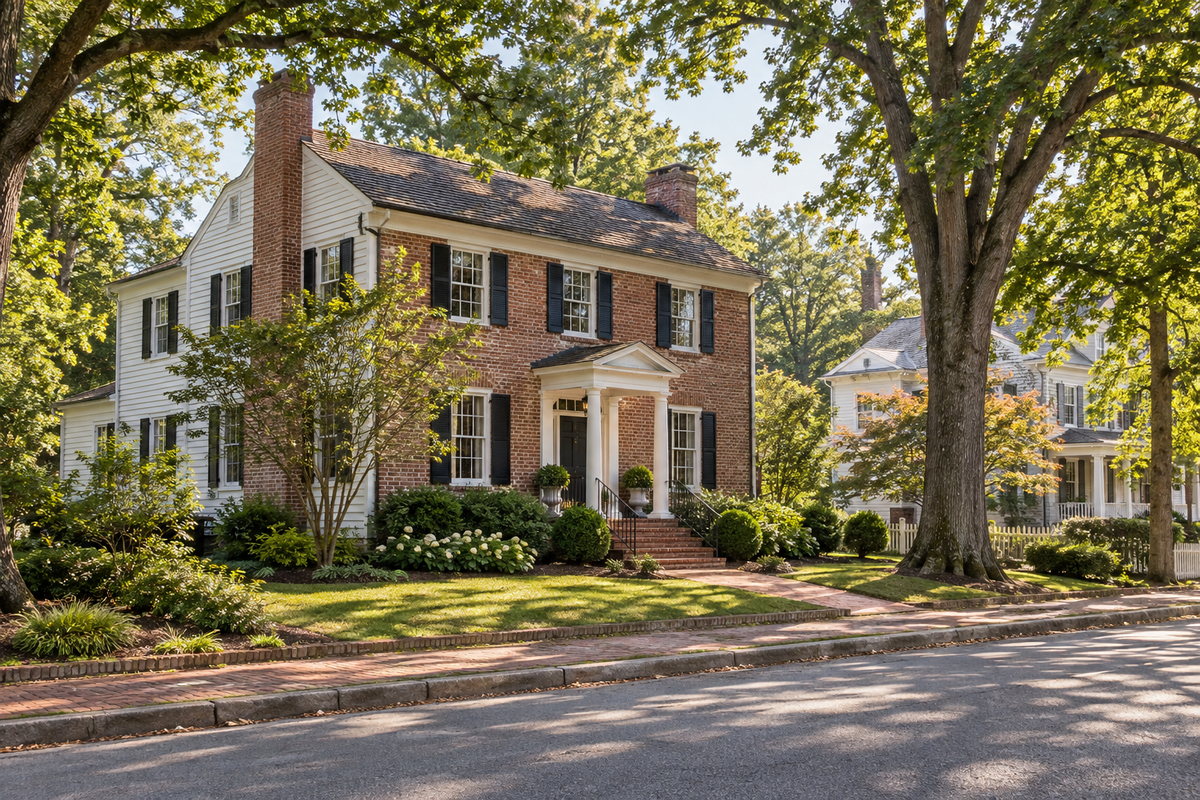

Leonardtown's older homes come with porches, plaster and history you can't order from a builder, and they also come with a short list of things to check: lead paint in anything built before 1978, aging wiring and plumbing, insurance, and possible review rules for exterior changes. The town has been St. Mary's County's official courthouse town since 1708, according to the Town of Leonardtown, so some of its houses have a long record behind them.
This guide covers what the town is like, what to inspect on an older home, the federal lead rules for buyers, renovation and historic review, the Maryland tax credit for restoring a historic home, insurance, and how to budget. Here's how I'd approach an older home in and around Leonardtown.
What Is Leonardtown Like?
Leonardtown is the only incorporated municipality in St. Mary's County with its own elected mayor and town council, and it received a Maryland Arts and Entertainment District designation in 2013, according to the town. Downtown has a courthouse square, shops and restaurants within walking distance, and a revitalized waterfront at the Leonardtown Wharf on Breton Bay.
The older housing stock is a big part of what makes the town feel the way it does. Around the square and on the streets running down toward the water, you'll see homes from different eras side by side, with porches, tall windows and mature trees. Each one has its own history of updates, which is why two older homes on the same street can need very different amounts of work.
First Fridays bring people downtown once a month. For drive times to the base and the rest of the county, see my Leonardtown guide, which also covers schools and prices.
What Should I Inspect on an Older Home?
Hire a home inspector who's comfortable with older houses, and ask them to look closely at these:
Older Home Inspection Checklist
What to look at closely
- Electrical: older wiring and undersized panels, which some insurers ask about
- Plumbing: older supply and drain lines, and what's been replaced
- Roof, chimneys and flashing
- Foundation and crawl space: moisture, settling and past repairs
- Heating: any history of oil heat, and whether an old tank is still on the property
- Windows and insulation
- Lead-based paint in any home built before 1978
Ask the seller for records of past work. Knowing the panel was replaced five years ago, or the roof last spring, can change both your inspection focus and your offer.
What Lead Paint Rules Apply When I Buy?
For homes built before 1978, federal rules require the seller to attach a Lead Warning Statement to the contract, give you an EPA-approved pamphlet on lead hazards, and give you a 10-day period to have the home inspected for lead paint or hazards, according to HUD. You and the seller can change that period in writing, and you can choose to skip the inspection. Sellers have to keep copies of the disclosures for at least three years.
Maryland has its own lead law for rentals built before 1978. If you might rent the home out later, read my property manager guide, which covers MDE registration and inspections at each change in tenant.
These are separate rules: the federal disclosure applies when you buy, Maryland's lead law applies if you rent the home out, and lead-safe work practices apply when you renovate. A pre-1978 home isn't a reason to walk away. It's a reason to plan renovations carefully and hire contractors who use lead-safe work practices on anything that disturbs old paint.
What Should I Ask the Seller of an Older Home?
- When were the roof, electrical panel, plumbing and heating last replaced or updated?
- Has the home ever had oil heat, and is there an old tank on the property?
- Do you know of any lead paint testing or abatement?
- Is the home designated historic, or in a historic district?
- Have you done exterior work that needed town or county review?
- Any water in the basement or crawl space, and what fixed it?
The answers shape what you ask your inspector to focus on, and they sometimes uncover paperwork, like permits or old surveys, that helps you later.
How Is Maintaining an Older Home Different?
Older homes were built with different materials and methods. Plaster walls, wood windows, old-growth framing and brick or stone foundations can last a long time with the right care, and they can be damaged by the wrong repair. Patching plaster with drywall, sealing old brick with the wrong mortar or swapping original windows without a plan can create new problems.
That's why the contractor matters as much as the budget. Ask anyone you hire what older homes they've worked on, and ask to see one. The same question protects you if you hope to claim the historic tax credit, since MHT reviews the work before it starts.
Are There Rules for Renovating a Historic Home?
Sometimes. St. Mary's County has a Historic Preservation Commission, described in this Southern Maryland Online listing, and some historic properties come with review requirements for exterior changes. Before you plan new windows, siding or an addition, check with the Town of Leonardtown and St. Mary's County Land Use and Growth Management about whether the property is designated and what's allowed.
Ask before you buy if a big exterior change is part of your plan. A designation doesn't stop all change, but it can affect materials, timing and cost.
Is There a Tax Credit for Restoring a Historic Home?
Yes, for some homes. The Maryland Historical Trust's homeowner credit is a state income tax credit of 20% of eligible rehabilitation costs, according to MHT. The home has to be a single-family, owner-occupied certified historic structure: individually listed in the National Register, a contributing building in a National Register district, or locally designated and found eligible by MHT. An older house doesn't qualify on age alone, so don't count on the credit until MHT confirms the home and the specific work.
Maryland Historic Homeowner Tax Credit
Key rules from the Maryland Historical Trust
The credit
- 20% of eligible rehab costs
- Minimum $5,000 spent
- Capped at $50,000 over 24 months
What counts
- Roof, chimney and structural repair
- Window and door restoration, masonry repointing
- Mechanical, electrical and plumbing work
The catch
- MHT must approve before work starts
- Work begun first won't qualify
Landscaping, new construction, mostly remodeling work, appliances and decor typically don't qualify. If you're buying an older home with plans to restore it, ask whether it's eligible before you close, and apply to MHT before any work begins. A tax professional can tell you how the credit fits your return.
How Does Insurance Work on an Older Home?
Get an insurance quote during your inspection period, since older systems can affect price and coverage. Have your inspection report handy, because insurers may ask about the roof, wiring and heating. Ask whether replacement cost coverage reflects what it would cost to rebuild older craftsmanship.
If the home is near Breton Bay or a creek, check the flood zone too. The county's floodplain office can help with residential questions.
Will My Loan Type Matter on an Older Home?
It can. With an FHA or VA loan, the appraiser looks at safety and condition items, like peeling paint on an older home or missing handrails, and some may need repair before closing. We'll factor that into your offer. My VA appraisal guide explains how that works.
How Should I Budget for an Older Home?
Older homes reward buyers who plan ahead. Set aside a repair reserve each year, and put safety and water issues first: the roof, electrical and drainage. Cosmetic projects can wait. If you're hoping to use the historic tax credit, plan eligible work as a project with MHT approval up front, rather than as a string of small repairs.
What Does Buying an Older Leonardtown Home Look Like?
Example scenario: This is made up to show the steps, not a real sale. A buyer finds a 1920s house a few blocks from the courthouse square with original windows, a newer roof and an old oil tank in the basement.
The seller provides the lead disclosure and pamphlet, and the buyer keeps the 10-day lead inspection window in the contract. The home inspector flags an older electrical panel. The insurance agent asks about the panel and the tank before quoting. The buyer asks the town whether the house is in a designated area before planning new porch railings.
Because the buyer hopes to restore the windows, they check with MHT whether the house qualifies for the homeowner credit before closing. They budget for the panel and tank removal first, and save the windows for a project with MHT approval up front.
What Mistakes Do Buyers Make With Older Homes?
- Waiving inspections for charm. The details you love are the same ones that need checking.
- Starting work before MHT approval. Work begun first won't qualify for the tax credit.
- Getting the insurance quote last. Older systems can change price and coverage.
- Assuming any contractor can do it. Older materials need people who know them.
- Skipping the designation check. Exterior plans can depend on it.
Who Answers Each Question?
- A home inspector with older-home experience: systems, structure and moisture.
- A certified lead inspector or risk assessor: lead paint and hazards.
- The Town of Leonardtown and St. Mary's County LUGM: designation and exterior review.
- The Maryland Historical Trust: whether a home qualifies for the tax credit and what work counts.
- Your insurance agent: coverage on older systems and rebuild cost.
- Me: what's for sale, how condition affects value and how to write the offer.
How Do I Renovate the Right Way?
Use contractors who know older homes, and follow lead-safe practices on anything built before 1978. Keep original details you love where you can, since they're a big part of what draws buyers to these houses. Check with the town and county before exterior changes on a designated property, and check with MHT before any work you hope to claim for the tax credit.
Look up the year built and past sales on SDAT Real Property Search before you tour. It's a quick way to know which rules apply before you fall for the porch.
Frequently Asked Questions
Electrical, plumbing, the roof, and the foundation, plus lead-based paint in any home built before 1978, which requires a federal lead disclosure. More on inspections in my buyer's guide.
Some historic properties come with review requirements for exterior changes. Check with the Town of Leonardtown and St. Mary's County Land Use and Growth Management before you plan a renovation. See what's for sale in Leonardtown.
The seller must attach a Lead Warning Statement to the contract, give you an EPA-approved pamphlet, and give you 10 days to inspect for lead hazards, which you can change in writing or waive, according to HUD. See how VA appraisals treat paint in my VA appraisal guide.
Yes. The Maryland Historical Trust offers a 20% state income tax credit on eligible rehab costs for owner-occupied certified historic homes, with a $5,000 minimum and a $50,000 cap over 24 months. MHT must approve the work before it starts. My property tax guide covers the other credits.
Yes. The Town of Leonardtown received a Maryland Arts and Entertainment District designation in 2013, according to the town. Learn more about the area in my Leonardtown guide.
Court was held in the area by 1654, and an official town with a designated courthouse was established in 1708, according to the Town of Leonardtown. See how Leonardtown compares with other St. Mary's towns.
Sources: Town of Leonardtown: Visit Us · HUD: Lead disclosure rule · Maryland Historical Trust: Homeowner tax credit · Southern Maryland Online: Historic Preservation Commission · St. Mary's County floodplain management · Maryland SDAT Real Property Search. Checked October 2026; rules and rates can change, so confirm anything that affects your decision.
This article is general real estate information, not legal, lending, tax, or insurance advice. Talk with the right licensed professional about your specific property.
Thinking About Buying in St. Mary's?
Tell Nicole what you're looking for and she'll send matching homes, with the local details checked.
Tell Me What You're Looking For Schedule a Consultation